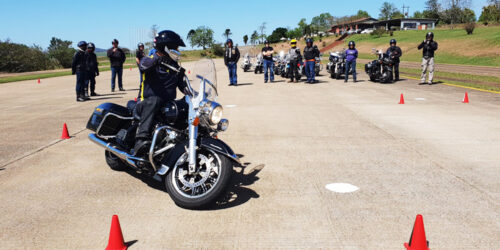
Protocols for crashes, injuries, and incidents.
We like to think of the training range as a sanctuary, a controlled, sterile environment where we dictate the pace. But every experienced instructor knows the sound of a “whiskey throttle”: that sudden, sickening rev limit followed by the crunch of plastic and the thud of a human hitting the tar.
In motorcycle training, risk can be alleviated, but it cannot be eliminated. You are teaching humans to operate unstable machinery. Eventually, gravity will win.
The measure of a professional riding school is not whether accidents happen, but how they are handled when they do. When the unexpected happens, the instructor must instantly switch from “Teacher” to “Incident Commander.”
Here is how to manage the chaos when a training session goes sideways.
1. The “All Stop” Protocol
The moment a student goes down, your focus naturally narrows to the fallen rider. This is a dangerous instinct. If you run to the victim while leaving three other beginners circling nearby, you are inviting a secondary incident due to distraction or target fixation.
The Golden Rule: The first casualty must not cause a second one.
- Command Control: Immediately signal an “ALL STOP” to the entire group. Train your students in the morning briefing that if they see you raise both arms (or show a “Time-Out” signal), they must stop immediately, turn the ignition off and put their side stands down.
- Secure the Scene: No one moves until all engines are off. Only then do you attend to the fallen rider.
2. The Human First, The Machine Last
A student’s natural reaction after a fall is embarrassment. They will almost always try to jump up immediately and lift the bike to show “I’m okay!”
Do not let them.
Adrenaline is a powerful anaesthetic. It can mask broken bones, torn ligaments, or concussion symptoms for several minutes.
- The 2-Minute Rule: Make the student sit down or stay still for at least two minutes. Do not let them touch the motorcycle.
- The Assessment: Use this time to check for shock (pale skin, shallow breathing) and ask simple questions to check for a concussion.
- The Bike: You (or an assistant) pick up the bike. This allows you to check for leaking fuel or oil without the student trying to hide the damage.
3. Managing the “Audience” (Group Dynamics)
Fear is contagious. If one student crashes hard, the entire group’s confidence can evaporate instantly. The other students are watching your reaction closely. If you panic, they will panic.
- Separate the Group: Do not let the other students crowd around the injured rider. It adds to the victim’s embarrassment and the group’s anxiety.
- The Reset Break: Send the rest of the class for a water break away from the immediate scene. This gives you space to work and gives them time to reset their nerves.
- The Debrief: Before training resumes, address the incident calmly. Explain what happened technically (e.g., “He grabbed the front brake with the handlebars turned”). This turns a scary accident into a logical learning moment, reducing fear.
4. Liability and Documentation
In South Africa’s controversial environment, “compassion” must be balanced with “protection.” Even if the student says they are fine, you need to cover your bases.
- The Indemnity Form: Ensure your indemnity forms are signed before a leg is swung over the seat. They are your first line of defence.
- The Incident Report: Document every fall that involves injury or significant damage. Note the time, the exercise being performed, the weather conditions, and exactly what the student did.
- Refusal of Care: If a student hits their head but refuses medical attention, note that they refused care in your report.
5. Knowing When to Call It
The hardest decision an instructor has to make is sending a student home.
If a student has had a significant scare or if their coordination has deteriorated due to fatigue or nerves, they become a danger to themselves and others.
It is better to offer them a free reschedule for another day than to push them to finish the course and risk a serious injury. A good instructor knows that sometimes, the most professional thing you can say is, “That’s enough for today.”
Stay Calm
Managing the unexpected is the dark side of our profession. We hope we never have to use our First Aid kits or fill out accident reports. But when the time comes, your calmness, authority, and adherence to protocol are what stand between a managed incident and a total disaster.