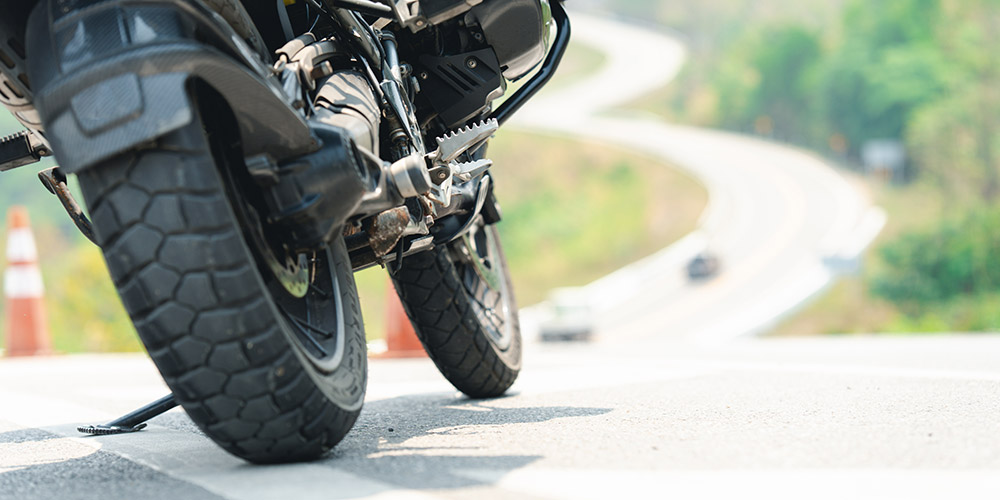
When choosing between tubed and tubeless tyres for a motorcycle, the decision directly affects rider safety, maintenance convenience, and the bike’s behaviour if a tyre fails at speed. For purely on-road riding, tubeless tyres are widely considered the gold standard, though both technologies have distinct characteristics.
Tubeless Tyres (The On-Road Standard)
Most modern street, sport, and touring motorcycles come standard with tubeless tyres mounted on cast alloy, forged, or specialised cross-spoked wheels. In this setup, the tyre and the wheel rim form an airtight seal, with the valve stem mounted directly to the rim.
Benefits for Road Riders
- The Ultimate Safety Margin (Slow Deflation): If a sharp object pierces a tubeless tyre at highway speeds, the air generally escapes slowly because the rubber seals around the object. This gives the rider time to notice a heavy steering feel, reduce speed, and pull over safely.
- Quick Roadside Fixes: A puncture on a Sunday morning ride doesn’t require a flatbed tow truck. Using a basic external plug kit (like sticky strings or mushroom plugs) and a portable compressor or CO2 canisters, the tyre can be repaired on the side of the road in minutes without removing the wheel from the motorcycle.
- Bead Retention: Tubeless rims feature a safety hump designed to lock the tyre bead tightly to the rim. Even during a loss of pressure, the tyre is far more likely to stay seated, preventing the bike from becoming instantly unmanageable.
- Cooler Running Temperatures: Without an inner tube rubbing against the inside of the tyre carcass, there is no internal friction. Cooler running translates to more consistent tyre profiles during cornering, better high-speed stability, and extended tread life.
Tubed Tyres (The Classic & Off-Road Heritage)
Tubed tyres rely on a separate, inflatable rubber inner tube placed inside the tyre casing to hold air pressure. This configuration is typically found on dual-sport bikes, classic retros, and cruisers featuring traditional laced spoked wheels.
Benefits for Road Riders
- Pothole and Impact Survival: Urban infrastructure isn’t always perfect. If you hit a severe pothole that dents or cracks a cast alloy rim, a tubeless tyre will instantly lose its bead and go flat. A spoked wheel with a tube can take a massive impact and deform, yet still hold air because the internal tube remains intact.
- Structural Flexibility: Spoked wheels naturally flex more than solid cast wheels, offering a slightly more compliant and forgiving ride over harsh, broken tarmac or corrugated road surfaces.
- Carcass Integrity: If a tyre suffers minor sidewall damage or a small tear that would completely ruin a tubeless airtight seal, inserting a fresh inner tube can often keep the motorcycle mobile.
Comparison Summary
| Feature | Tubeless Tyres | Tubed Tyres |
|---|---|---|
| Puncture Behaviour | Slow, manageable air loss | Sudden, rapid deflation (high blowout risk) |
| Roadside Repair | Easy (external plug, wheel stays on the bike) | Difficult (requires wheel removal and tyre levers) |
| Heat Build-up | Low (no internal tube friction) | Higher (friction between tube and tyre carcass) |
| Rim Dependence | Requires specialised airtight rims | Works on standard spoked and solid rims |
| Impact Resistance | Risk of de-beading if the rim edge bends | Keeps air even if the rim suffers minor bending |
| Wheel Retention | Safety humps keep tyre seated on the rim | High risk of the tyre spinning or slipping off the rim when flat |
Why Tubeless is Better for On-Road Motorcycles
For standard road infrastructure, highways, urban commutes, and mountain passes, tubeless tyres are vastly superior for two critical reasons:
1. The Catastrophic Deflation Risk
On a motorcycle, maintaining stability depends entirely on two small contact patches. When a tube is punctured, the air does not just exit through the hole in the tread; it rushes out instantly through the valve stem hole and around the spoke nipples in the rim. This results in an instantaneous blowout.
At speed, a sudden front-tyre blowout on a tube setup can cause severe handlebar instability (tanks lappers). In contrast, a rear blowout makes the back of the bike sway violently, creating a high-risk survival situation. Tubeless tyres mitigate this by offering a predictable, gradual loss of pressure.
2. The Nightmare of Roadside Repairs
Fixing a punctured tubed tyre on the side of a busy road is a gruelling, complex operation. It requires propping the bike up, removing the axle, taking the wheel off, breaking the bead with tyre levers, patching or replacing the tube (while risking pinching the new tube with the levers), and reassembling everything.
A tubeless tyre completely bypasses this. The wheel stays securely on the motorcycle, and the repair is done entirely from the outside, getting the rider back on the road safely in under ten minutes.
The Modern Middle Ground
Riders who prefer the classic aesthetic or impact resistance of spoked wheels can look to modern cross-spoked rims (where the spokes lace to the outer edge of the rim, outside the airtight chamber) or sealed rim beds. This combination delivers the structural benefits of a spoked wheel alongside the safety and maintenance advantages of a tubeless tyre.