When it comes to motorcycle safety, nothing is more critical than your ability to shed speed quickly and predictably. For decades, drum brakes were the industry standard, slowing down everything from lightweight commuters to heavyweight cruisers. However, as engine performance evolved, so did the need for better stopping power.
Today, modern motorcycles overwhelmingly utilise disc brakes, particularly on the front wheel, where the vast majority of your braking force is generated. If you have ever wondered exactly why the industry shifted, and why disc brakes are vastly superior for modern riding dynamics, it comes down to a few critical engineering realities.
1. Superior Heat Dissipation
The fundamental job of any braking system is to convert kinetic energy (your forward motion) into thermal energy (heat) through friction. How the system manages that heat dictates its performance.
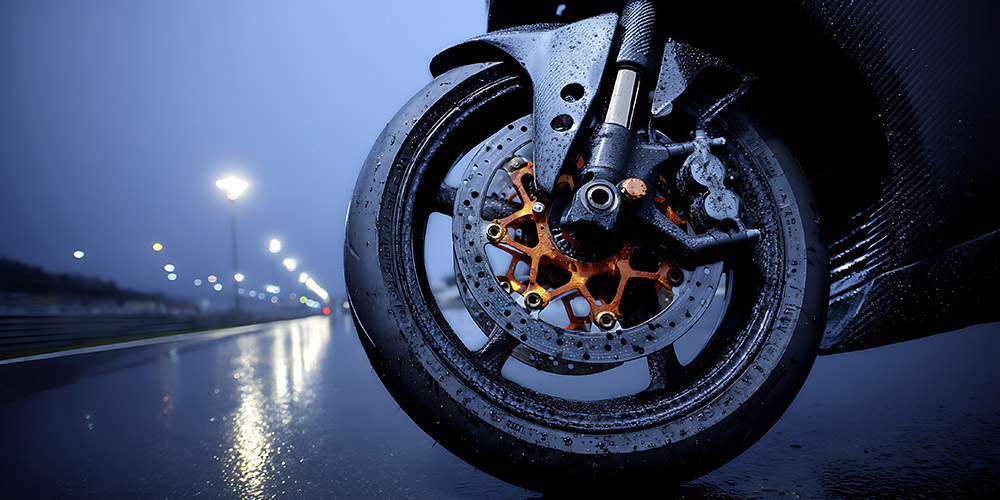
- Disc Brakes: The brake rotor (disc) and callipers are completely exposed to the open air. As you ride, the constant airflow rapidly cools the metal components, preventing heat from building up.
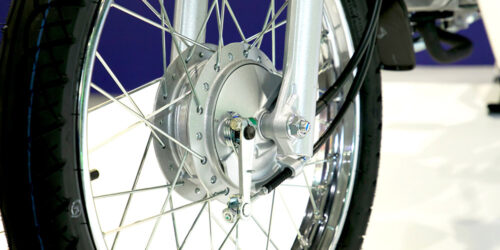
- Drum Brakes: The entire mechanism, including the brake shoes and linings, is enclosed inside a heavy metal drum. This design naturally traps heat. Under heavy or prolonged braking, such as navigating heavy urban or freeway traffic or spirited cornering, the drum expands from the heat, causing the shoes to lose effective contact. This results in brake fade, a dangerous situation where your lever or pedal feels firm, but your stopping power vanishes.
2. Reliable Performance in Wet Weather
Water is an enemy of friction, and how a braking system sheds water determines how safely you can ride in a downpour.
- Disc Brakes: Centrifugal force rapidly flings water, mud, and road grime off the exposed spinning disc. Furthermore, the brake pads act like a squeegee, wiping the braking surface clean the instant you apply pressure, ensuring near-immediate bite even in a torrential storm.
- Drum Brakes: Once water enters a brake drum, it gets trapped. The water pools at the bottom, lubricating the friction material and severely reducing braking efficiency until the system dries out or the water evaporates through friction heat. This causes a terrifying delay when you pull the lever in the wet.
3. Progressive Feel and Feedback
Motorcycle riding requires a high degree of finesse, particularly regarding front-tyre traction.
- Disc Brakes: Hydraulic disc systems offer exceptional modulation. The pressure you apply to the handlebar lever is directly proportional to the stopping force at the wheel. This precise feedback allows you to feel the exact limits of grip.
- Drum Brakes: Drum brakes often feel vague or spongy. They are prone to a “self-energising” effect, where the leading brake shoe is pulled forcefully into the drum by the rotation of the wheel. This can cause the brakes to grab suddenly or lock up unpredictably, which is highly dangerous on a two-wheeled vehicle.
4. Effortless Maintenance and Inspection
Keeping a close eye on your brakes, it’s that simple.
Disc Brakes: You can inspect your brake pad wear visually in a matter of seconds without removing a single component. When the pads do wear down, replacing them is generally a straightforward, external job.
Drum Brakes: To check the wear on internal brake shoes or to clean out the fine, abrasive brake dust that accumulates inside, you must remove the entire wheel assembly and open up the drum structure. Although some drum brakes use a visual external indicator/pointer that shows the remaining usable range, it still makes routine safety checks far more labour-intensive.
Direct Comparison
| Feature | Disc Brakes | Drum Brakes |
|---|---|---|
| Cooling | Excellent (fully exposed to airflow) | Poor (heat trapped inside the drum) |
| Wet Weather | Self-cleaning, rapid water shedding | Retains water, delayed response |
| Lever Feel | Linear, progressive, high feedback | Vague, prone to sudden biting or locking |
| Maintenance | Quick visual inspection, simple pad swaps | Requires wheel removal to inspect or service |
| Weight | Generally lighter components | Heavier, adding to unsprung weight |
The Winner is Clear
While drum brakes are still occasionally found on the rear wheels of smaller, budget-friendly commuter and delivery bikes or vintage-styled classics where production costs and top speeds are low, they simply cannot compete with the safety and efficiency of a disc system.
For the modern motorcyclist, disc brakes deliver the predictable control, wet-weather dependability, and rapid heat rejection needed to stay safe on today’s roads.