The Economics, Engineering, and Safety Logic of South Africa’s Delivery and Commuter Bikes
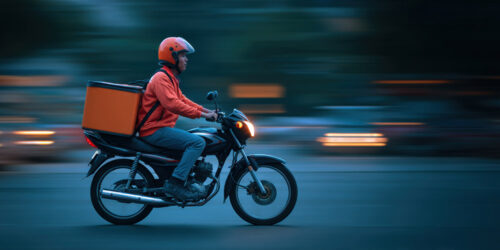
Every day, thousands of delivery riders across South Africa set off on bikes equipped with motorcycle drum brakes, and most of them have no idea what that means for their safety when something goes wrong at speed. The Big Boy Velocity Cargo 150, Honda ACE 150, Bajaj Boxer 150, Hero Eco 150, and TVS Trak 150 — the workhorses of South Africa’s booming last-mile delivery sector — all run drums front and rear as standard fitment. That is not an accident, a cost-cutting shortcut, or a sign that manufacturers do not know better. It is the outcome of a specific set of economic, engineering, and market decisions that make complete sense at 60 km/h on a rural road, and rather less sense when the same bike is threading through N1 traffic at 100 km/h with a loaded delivery box on the back. This report unpacks the full picture.
- It is overwhelmingly a cost-plus-serviceability decision: the price gap between a drum-brake and disc-brake variant of the same model is typically only R2,000–R4,000 in the South African market. On a machine retailing between R18,000 and R30,000, that 8–15% premium, combined with higher lifetime maintenance costs and the need for more specialised mechanics and spare-parts supply chains, tips the calculus firmly toward drums. No South African regulation mandates a disc brake on a small motorcycle.
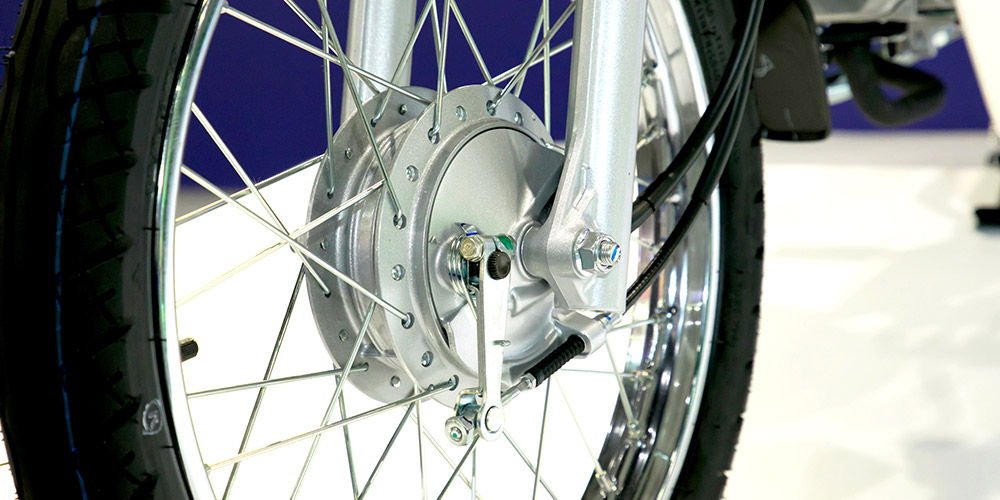
- For the actual operating envelope, sub-200cc commuter and delivery bikes at 40–80 km/h on potholed, often rough roads, drum brakes and spoked/tubed wheels are genuinely adequate and, in some respects, better suited to the job: drums are sealed against dust, mud, and water, provide a progressive feel that is more forgiving for less-experienced riders, and the sealed drum hub on a spoked wheel handles rough road impacts better than an alloy rim with a tubeless tyre. In a ZA Bikers road test, the drum-braked Big Boy Velocity 150 Cargo “actually out-braked a competitor with discs.”
- But “adequate” is not “safe enough” as speeds and loads increase: at sustained highway speeds, on long descents, or under heavy delivery loads, drums fade in a way that discs do not. The Big Boy Pacer 200, a step up in the same segment, arrives with a front disc and alloy rims as standard, and its reviewers note that the upgrade is “comforting,” even without ABS. The direction of travel in the segment is clear: as bikes move up in capacity and are expected to handle higher speeds and heavier commercial loads, disc brakes become the minimum acceptable standard.
Key Findings
- Confirmed SA retail prices for the main delivery/commuter bikes place the segment between R18,499 (Big Boy Velocity 175 Cargo) and R29,999 (Honda ACE 150). The drum-brake configuration is standard across the bottom of this range; front disc only arrives at the Big Boy Pacer 200 (R22,999) and above.
- Every drum-brake model in this segment runs its brakes in the same performance band: the Honda ACE 150 specifies leading/trailing drum front and rear; the Bajaj Boxer 150 runs drum at each end; the TVS Trak 150 runs 130 mm drum front and rear; the Hero Eco 150 runs 130 mm drums front and rear; and the Big Boy Velocity 150 and 175 Cargo both run drum front and rear.
- The one meaningful step up in this price bracket is the Big Boy Pacer 200: front disc, rear drum, alloy rims, tubeless tyres, 191cc engine with a 110 km/h top speed — and it retails at R22,999, only R4,500 more than the Velocity 175 Cargo. The Pacer 200 demonstrates that disc brakes and alloy rims are achievable at very low price points; the choice not to fit them on the 150 Cargo-class bikes is a deliberate commercial and engineering decision, not a capability constraint.
- No South African regulation mandates a disc brake on sub-200cc motorcycles. South Africa is a signatory to UN ECE R78, the international motorcycle braking standard, which is performance-based and explicitly permits drum brakes. There are no local regulations in NRTA or SANS standards that require disc brakes on light motorcycles.
- The drums are adequate in their intended operating envelope. These bikes are designed and sold for urban and peri-urban delivery and commuting at 60–80 km/h. Crash-reconstruction data confirms that at these speeds, tyre grip and rider technique — not the brake hardware — are the primary determinants of stopping distance. A correctly adjusted drum brake can match a disc in initial bite at low speed through self-servo action.
- Drums have context-specific advantages that are often overlooked. The sealed drum housing resists dust and mud effectively — a real benefit on the unpaved roads, gravel surfaces and construction-site access roads that South African delivery riders navigate daily. The progressive feel also reduces the risk of front-wheel lockup for riders who have had limited formal training, which is the majority of commercial delivery riders.
- Spoked rims with tubed tyres are the appropriate choice for rough road surfaces. South Africa has roughly 301,000 km of gravel roads versus around 63,000 km of surfaced rural roads; in KwaZulu-Natal, approximately 80% of rural roads are gravel. Spoked wheels absorb pothole impacts by flexing progressively across the spoke network; an alloy/cast rim hits the same pothole and is far more likely to crack or fracture, requiring full replacement. Spokes can be re-tensioned or replaced individually by any mechanic with basic tools.
- The market is already self-differentiating. The Hero Eco 150 TR variant deliberately adds spoked wheels, semi-knobbly tyres, hand guards and a bash plate for riders whose routes include gravel and dirt tracks — and it carries the same 130 mm drums as the standard Eco 150. The Bajaj Boxer 150 HD variant, by contrast, moves to 17″ alloy wheels with tubeless tyres for urban tarmac use — but retains mechanical drum brakes front and rear. These variant splits confirm that manufacturers are making deliberate, route-specific choices rather than simply fitting the cheapest available components across the board.
Details
1. South African Market Models and Confirmed Specifications
The following are the primary delivery and commuter motorcycles sold new in South Africa in this segment, with confirmed brake and wheel specifications and approximate retail prices as of mid-2025/2026:
Big Boy Velocity 150 Cargo — Drum front, drum rear. Spoked rims, tubed tyres (2.75×18 front, 3.00×18 rear). 150cc, cruising speed 60–75 km/h, top speed 90 km/h. Approximately R18,499–R19,999.
Big Boy Velocity 175 Cargo — Drum front, drum rear. Spoked rims, tubeless tyres (2.75×18 front, 3.00×18 rear). 169cc, cruising speed 65–80 km/h, top speed 100 km/h. From R18,499.
Big Boy Pacer 200 — Front disc, rear drum. Alloy rims, tubeless tyres. 191cc, top speed 110 km/h. R22,999. The Pacer is the step-up model in the Big Boy commercial range and the first to carry a front disc as standard.
Honda ACE 150 — Leading/trailing drum front and rear. Alloy wheels, 18-inch front and rear. 150cc, 8.74 kW, 11.99 Nm. Fuel consumption 49 km/L. R29,999.
Bajaj Boxer 150 — Drum front, drum rear. 145cc, 12 hp, 12.1 Nm. R22,495 approximately. ZA Bikers’ reviewer noted: “The only thing that I wish the Boxer came equipped with was a front disc brake, as I felt the brake pressure and stopping power could have been a bit better.”
Bajaj Boxer 150 HD — Drum front, drum rear. 17-inch alloy wheels, tubeless tyres. Mechanically expanding shoe type brakes front and rear.
TVS Trak 150 / HLX 150 — 130 mm internally expanding drum front and rear. Alloy wheels on the Trak 150 (alloy variant). 150cc. TVS Trak 150 HLX: R25,999. TVS HLX 150: approximately R27,000–R33,000 depending on variant. AutoTrader first-ride review (February 2026): “The drum brakes do take some getting used to.”
Hero Eco 150 — 130 mm drum front and rear. 17-inch alloy wheels. 150cc. From R22,500–R24,999.
Hero Eco 150 TR — 130 mm drum front and rear. Spoked wheels, all-terrain tubed tyres. 150cc. Approximately R22,995. Purpose-designed for gravel, farm roads, and rough terrain.
What this table makes immediately clear is that a front disc brake in this segment is not a matter of technical limitation — the Big Boy Pacer 200 proves the hardware is available at R22,999. It is a deliberate cost and positioning decision.
2. The Price Gap in South African Terms
The retail price difference between the drum-brake 150cc workhorses and the front-disc Pacer 200 is approximately R3,500–R4,500 — a meaningful sum in a segment where fleet operators are buying five, ten or twenty bikes at a time for delivery operations. For a fleet of twenty bikes, R4,000 per unit translates to R80,000 in additional capital outlay up front. That is before factoring in the higher ongoing maintenance costs of a hydraulic disc system relative to a mechanical drum.
For an individual rider purchasing on credit, the R4,000 premium changes the monthly instalment and — in many cases — the bank’s affordability assessment. In a market where the buyer is frequently a small business owner, a gig-economy delivery worker, or a rural commuter, every rand of purchase price matters.
The Honda ACE 150 at R29,999 illustrates a different market position: Honda’s brand premium, dealer network, and Japanese engineering reputation allow it to command a higher price — but it still runs drums front and rear, confirming that the drum choice is not simply about penny-pinching. Honda has made a deliberate serviceability and reliability decision: drums are simpler, universally understood, and require no hydraulic maintenance, all of which matters when the bike is covering 80–100 km per day in urban delivery service.
3. Engineering Trade-offs at South African Operating Speeds
Where drums perform adequately: The bikes in this segment are designed and sold for city, town, and peri-urban commuting at 60–80 km/h. The Big Boy Velocity 175 Cargo’s factory specification lists a cruising speed of 65–80 km/h and a maximum speed of 100 km/h. The Honda ACE 150 achieves 49 km/L at steady-state speeds consistent with urban traffic. At these speeds, the limiting factor in emergency braking is not the friction device — it is tyre grip and rider input. A correctly adjusted drum, exploiting its leading-shoe self-servo action, can generate comparable bite to a similar-diameter disc in a single low-speed stop.
Drums also have a genuine advantage in their operating environment: the sealed housing resists dust, mud, water ingress, and the debris that delivery bikes encounter on informal settlement roads, construction-site tracks, and unpaved driveways. A disc, being open to airflow, also exposes the rotor and caliper to these contaminants.
Where drums fall short: Heat dissipation is the fundamental weakness. The enclosed drum traps heat generated during repeated braking, causing brake fade — a progressive reduction in stopping power as the linings approach their thermal limit. The self-servo geometry that gives a drum its strong initial bite becomes a liability as temperature rises, because the same geometry exaggerates the reduction in friction as lining material breaks down under heat. On a sustained downhill run, in stop-start peak-hour traffic under a heavy delivery load, or on a long highway stretch with repeated hard stops, drum fade is real and measurable.
Disc brakes, being fully exposed to airflow and with far greater thermal mass and dissipation area relative to the friction surface, resist fade far better. They also clear standing water almost instantly — a disc’s braking is fully restored within one or two wheel revolutions after a puddle. A drum after heavy rain may require several gentle brake applications to dry out before full performance is restored. For a delivery rider working through a KwaZulu-Natal summer storm, that matters.
The counter-intuitive safety nuance: A more powerful front disc on a bike without ABS, ridden by an untrained or minimally trained rider, can actually increase the crash risk rather than reduce it. The majority of untrained riders in an emergency apply the front brake too aggressively, lock the front wheel, and fall. A drum’s softer, more progressive bite is less likely to induce an instant lockup from a panicked squeeze. This is the core reason why the safety improvement that matters most is ABS — not the disc rotor by itself. A disc without ABS on a bike ridden by an untrained delivery rider is not automatically safer than a drum.
4. The Spoked Rim and Tubed Tyre Question
South Africa has approximately 301,000 km of gravel roads versus around 63,000 km of surfaced rural roads, and in provinces like KwaZulu-Natal and Limpopo the gravel proportion is even higher. Delivery motorcycles do not only operate on urban tarmac — they cover township streets, access roads to industrial sites, informal settlement tracks, farm roads, and in rural areas, roads that are nominally “public” but are essentially dirt paths.
On these surfaces, the spoked wheel’s structural advantage is decisive. Spoked wheels distribute load across the entire spoke network under tension. When a spoked wheel strikes a sharp-edged pothole, the energy is absorbed progressively as individual spokes flex; the wheel deforms without catastrophic failure. An alloy or cast wheel, being a rigid monocoque structure, concentrates the impact stress at the point of contact — and alloy rims crack, buckle, or fracture on exactly the pothole strikes that spoked wheels survive.
The repair calculus also favours spokes in the field: a bent or broken spoke can be replaced by any motorcycle mechanic in any town in South Africa, for a few rand, with hand tools, in under an hour. A cracked alloy rim requires a complete wheel replacement — the part must be sourced, delivered, and the tyre transferred — which can take a delivery operation’s bike off the road for days.
The Hero Eco 150 TR’s market positioning makes this case explicitly: it is sold as the “all roads” variant of the Eco 150, with spoked wheels and all-terrain tyres added precisely because its buyers need to traverse surfaces where an alloy rim is a liability. The TR costs approximately R2,000 more than the standard Eco 150 — but the additional protection against pothole damage and the improved field-repairability of the spoked setup represent significant value for fleet operators whose routes include rough surfaces.
The one caveat worth noting is the tyre situation on the Velocity 175 Cargo: despite running traditional spoked rims, Big Boy has specified tubeless tyres on that model. This is a useful incremental upgrade — a tubeless flat is manageable roadside with a plug kit, whereas a tubed flat requires removing the wheel and tyre. It is not a universal solution for all spoke configurations, but it illustrates that the segment is adopting practical improvements where the cost impact is low.
5. The Regulatory Context in South Africa
South Africa is a signatory to UN ECE R78, the international standard governing motorcycle braking systems. ECE R78 is a performance-based regulation: it sets deceleration thresholds and wet-braking recovery requirements, and it explicitly includes test procedures for drum brakes. It does not require disc brakes or ABS on light motorcycles in the sub-200cc class.
South Africa’s National Road Traffic Act (NRTA) and the associated vehicle construction and use regulations require motorcycles to have effective braking systems, but do not prescribe the type. There are no SANS standards mandating disc brakes or ABS on the delivery and commuter bike categories covered in this report.
This means that every bike in the table above — drums, no ABS — is fully legal for sale and use on South African roads. The regulatory gap is real, but it is not unique to South Africa: no sub-Saharan African country mandates disc brakes or ABS on sub-200cc motorcycles, and the only major developing-market regulator that has done so is India, which is phasing in ABS on all two-wheelers from January 2026 (though the ≤125cc implementation timeline is subject to industry lobbying and may be deferred).
6. What the Segment’s Reviewers Actually Say About the Brakes
South African motorcycle media have tested these bikes on South African roads and been candid about the brakes:
- Big Boy Velocity 175 Cargo (ZA Bikers, 2024): “The brakes are drums at both ends and work acceptably well.”
- Big Boy Pacer 200 (ZA Bikers, 2024): “Suspension and brakes are basic but function adequately and it’s comforting to have a front disc brake (although not equipped with ABS).”
- Bajaj Boxer 150 (ZA Bikers, 2022): “The only thing that I wish the Boxer came equipped with was a front disc brake, as I felt the brake pressure and stopping power could have been a bit better.”
- TVS Trak 150 (AutoTrader, February 2026): “The drum brakes do take some getting used to.”
- Hero Eco 150 TR (ZA Bikers): “When it comes to stopping, the drum brakes work decent enough for the urban commute.”
The consistent thread across these reviews is that drums are described as “adequate” or “acceptable” in the urban commute context, with reviewers noting the limitation and wishing for a disc — but acknowledging that within the bike’s intended use case, the drums are fit for purpose. The moment a bike is expected to operate at higher speeds or carry heavier loads consistently, the disc becomes more than desirable: it becomes a safety issue.
7. Safety Implications for South Africa
South Africa’s motorcycle fatality profile is different from sub-Saharan Africa’s highest-density markets. Unlike Uganda, Togo, or Ghana — where motorcycles are involved in 30–72% of road fatalities — motorcycles represent a smaller share of the South African vehicle population, and the country’s road network includes substantial high-speed infrastructure: the N1, N2, N3 and national freeway network where 120 km/h is the legal limit.
This creates a specific risk for South Africa’s delivery bike segment that does not exist to the same degree in, say, Nairobi or Kampala: these bikes are increasingly being operated on roads for which they were not designed. A Big Boy Velocity 175 Cargo with a 100 km/h top speed and drum brakes at both ends, used for Sixty60 or UberEats deliveries in Johannesburg, will encounter N1 on-ramps, national roads with 100 km/h limits, and freeway service road sections where speed and stopping demands exceed what the bike’s brake hardware was intended to manage.
The risk is compounded by rider training levels. The majority of commercial delivery riders in South Africa have a learner’s licence at best, limited formal instruction, and no structured exposure to emergency braking technique. Research from the MSI Urban Rider Course intake data confirms that untrained riders almost universally apply the rear brake harder than the front in an emergency, significantly reducing achievable deceleration — and that a significant proportion lock the front wheel when applying the front brake at all.
WHO and the FIA Foundation consistently rank the dominant motorcycle fatality factors as: absence of helmets, speeding, alcohol, untrained riders, and mixed traffic. Vehicle braking hardware is a secondary factor — but it is a real one at higher speeds and under sustained load.
The Role of Training: MSI’s Urban Rider Course and Urban Master Class
The most important single intervention available to delivery and commuter riders operating these drum-brake bikes on South African roads is not a hardware upgrade — it is training.
The MSI Urban Rider Course (URC), developed by Hein Jonker of the Motorcycle Safety Institute of South Africa (MSI) from four years of motorcycle crash-data collection and analysis, is purpose-built for the operating environment these bikes inhabit. The URC trains riders from move-off up to 80 km/h — exactly the speed band in which the Velocity Cargo, Bajaj Boxer, Honda ACE, Hero Eco, and TVS Trak operate daily. The curriculum covers hazard avoidance, emergency escape (separating swerving from braking), stop-and-go avoidance to prevent rear-end collisions in traffic, target-fixation management, and correct front-and-rear brake application — the precise technique that determines whether a drum brake performs adequately or becomes a liability.
This matters because drum brakes, correctly used, are more capable than most untrained riders can exploit. The limitation is rarely the hardware; it is the rider’s ability to apply progressive, maximum-deceleration braking without locking the front wheel. Training closes that gap directly.
For riders who have completed the URC and whose routes extend beyond the urban core — onto faster roads, national routes, or into more demanding traffic environments — MSI’s Urban Master Class (UMC) builds on those foundations by introducing pressure, urgency, and higher-speed survival scenarios. Where the URC establishes the skill base, the UMC stress-tests it against the real conditions that South African urban and peri-urban roads increasingly demand. Both programmes are delivered through MSI’s network of endorsed riding schools and certified instructors.
This training-first approach is consistent with what international road safety bodies — the WHO, the FIA Foundation, and the African Development Bank/World Bank — identify as the highest-leverage intervention in motorcycle safety: qualified rider training matched to the actual operating environment, not simply hardware upgrades applied to untrained riders. A disc brake without ABS on an untrained rider is not a safety improvement over a drum; the rider simply locks the disc instead of the drum. Training is what makes any brake system work.
Recommendations
For fleet operators and individual buyers:
- For pure urban and peri-urban delivery and commuting at under 80 km/h on mixed surfaces, the drum-braked 150cc delivery bikes are a defensible choice — particularly where fleet maintenance is handled by general motorcycle mechanics and where rough roads form part of the route. The Honda ACE 150, Hero Eco 150, Bajaj Boxer 150, TVS Trak 150, and Big Boy Velocity Cargo range are all fit for their stated purpose under these conditions.
- If routes regularly include national roads, sustained speeds above 80 km/h, long downhill sections, or consistently heavy delivery loads, the Big Boy Pacer 200 (R22,999, front disc) or a similar front-disc-equipped bike should be the minimum specification. The additional R3,500–R4,500 over the Velocity 175 Cargo is modest in the context of the safety margin it provides on faster roads.
- For gravel, farm, township, and rough-surface routes, the Hero Eco 150 TR with its spoked wheels and all-terrain tyres is the more appropriate specification than the standard Eco 150, and the ~R2,000 premium over the standard model is worth it for riders who cannot afford to be stranded with a cracked alloy rim.
- Invest in structured rider training before committing to hardware. The MSI Urban Rider Course should be the first investment for any new delivery rider, ahead of accessories or bike upgrades. It is the single highest-return safety intervention available and addresses the most common crash causes — incorrect braking technique, panic reactions, and poor hazard management — that no brake hardware upgrade can solve.
- Do not conflate “front disc” with “ABS-equipped.” A front disc without ABS on an untrained rider can increase crash risk relative to a drum, because the disc’s more powerful initial bite can induce front-wheel lockup before the rider can modulate. ABS is the hardware that genuinely transforms braking safety for untrained riders; a disc rotor alone is not.
For manufacturers and distributors:
- A front-disc-plus-single-channel-ABS option at the entry level is the most meaningful single hardware upgrade the segment can make and the direction India’s regulation is forcing on its domestic market. The evidence from IIHS research is that ABS is associated with a 22% reduction in fatal crash involvements. At the price points in this segment, a modest ABS premium is achievable and warranted.
- Continue adopting incremental upgrades that fit the operating context — the Velocity 175 Cargo’s tubeless tyres on spoked rims being a good example. These incremental steps are more valuable than forcing a wholesale switch to alloy rims on bikes that will be operated on rough surfaces.
For regulators:
- The most effective regulatory interventions in this segment are not a disc-brake mandate but: mandatory helmet standards and enforcement, structured rider licensing with practical assessment, fleet operator obligations to ensure rider training, and basic motorcycle roadworthiness inspection. A CBS-then-ABS graduated mandate, modelled on India’s phased approach, is the appropriate medium-term regulatory direction.
Caveats
- Retail prices quoted are approximate and reflect dealer advertised prices in mid-2025/2026. Prices vary by dealer, region, and promotional period. Confirm current pricing with authorised dealers before any purchasing or fleet decision.
- The Bajaj Boxer 200 referenced in earlier discussion does not appear to be available through the official Bajaj South Africa channel; the standard SA model is the Boxer 150. Bajaj’s range for South Africa currently centres on the Boxer 150 (BM150) and the Boxer 150 HD variant.
- Drum brake performance claims from South African road tests are directional assessments from journalists on public roads, not controlled laboratory tests. Treat them as representative of real-world conditions rather than precise engineering measurements.
- The safety causation argument is proportionate. No source in this research identifies drum brakes as a leading cause of motorcycle fatalities; they are a contributing vehicle-quality factor that is secondary to helmets, speed, alcohol, and training. The safety case for disc brakes and ABS is real but should not be overstated relative to the more fundamental training and behaviour interventions.