
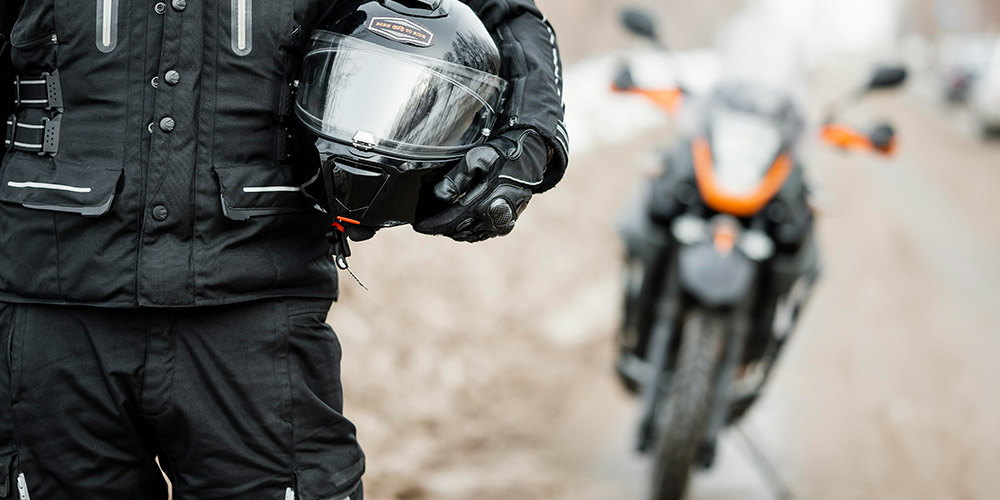
Riding in South Africa is no longer just about managing the motorcycle; it is an exercise in high-stakes risk management. Our road infrastructure is degrading, failed traffic signals render intersections chaotic, and the sheer volume of unpredictable traffic requires a defensive strategy that goes far beyond what the K53 test requires. As riders, we cannot wait for the roads to be fixed. We must adapt our survival strategies to the reality of the road beneath our tyres.
The Threat of Potholes and Surface Degradation
A pothole that merely bends a car rim can be fatal for a motorcyclist. South Africa’s crumbling road edges, ‘tar snakes’, and gaping holes mean your visual horizon needs constant adjustment. Tar snakes are especially slippery when hot or wet, so avoid braking or leaning hard on them wherever possible.
- Scan and Anticipate: Do not target-fixate on the vehicle ahead. Look through their windows and focus on the road surface they are passing over. If a car suddenly swerves, expect a hazard.
- Create Space: Maintain a minimum three-second following distance. This gives you the time needed to spot a road defect and alter your line without unsettling the suspension. On poor surfaces, in the wet or at night, extend it even further.
- The Physics of Evasion: If hitting a pothole is unavoidable, square up the motorcycle, keep a loose grip on the bars, and stand slightly on the pegs. Do most braking before you reach the pothole, then release the brakes and roll on slightly just before impact. This lightens the front, letting the suspension absorb the shock rather than bottoming out.
Gridlock, Failed Traffic Lights, and the Unlit Intersection
Cable theft, vandalism, power failures and poor maintenance have turned traffic lights into mere roadside ornaments in many municipalities. This creates dangerous chokepoints and aggressive driving behaviour.
- Treat Every Intersection as Hostile: When traffic lights are down, the four-way stop rule applies, but never assume other motorists will respect it. Make eye contact with drivers, cover your brakes, and approach at a speed that allows you to stop within the distance available.
- Filter with Extreme Caution: Filtering through slow-moving or stationary traffic is not specifically prohibited in South Africa and is widely tolerated, but it remains a legal grey area, and a rider who collides with another vehicle while filtering may be found at fault. Done carefully, it can be safer than sitting in the strike zone of a rear-end collision. However, keep your speed differential low (no more than 20 km/h faster than the surrounding traffic), and stop filtering once traffic is moving at more than about 50 km/h. Watch for frustrated drivers suddenly switching lanes without indicating or opening doors.
- Night Riding in the Dark: Without streetlights, your visibility drops drastically. Ensure your headlight is clean and correctly aimed. Wear gear with retroreflective panels or strips, which reflect light; fluorescent hi-vis works well in daylight but does little at night on its own. Black leather on an unlit road makes you virtually invisible to a tired commuter.
Positioning for Survival
Riding on the left side of the road presents specific challenges, especially when dealing with the unpredictable stopping patterns of public transport.
| The Hazard | The Mistake | The Defensive Strategy |
|---|---|---|
| Minibus Taxis | Riding in the left third of the left lane near the kerb. | On multi-lane roads, move to the right third of the left lane. On a single carriageway, hold a position that keeps you clear of oncoming traffic and drop further back. This increases your visibility in the driver’s mirrors and gives you an escape route if they swerve left to pick up passengers. Expect them to stop without warning and pull off again without looking. |
| Blind Rises | Riding in the centre of the lane over a crest. | Position yourself in the left third of your lane to put the maximum possible space between you and any oncoming vehicle overtaking blindly over the crest. |
| Intersections | Following closely behind a large truck or SUV. | Drop back and stagger your position. Shift to the right or left third of the lane so you can see past the vehicle ahead, and more importantly, so oncoming traffic waiting to turn right across your path can see you. The right third usually makes you more visible to them. |
The Commercial Frontline: Delivery Riders in the Danger Zone
The explosion of the on-demand delivery economy has put thousands of lightweight, low-capacity motorcycles on our roads, operated by riders facing immense time pressure. For the commercial rider, the road is a workplace, and the risks are magnified by delivery quotas, heavy payloads, and the constant distraction of a GPS screen.
- Load Dynamics and the Top Box: A heavy delivery box mounted high and behind the rear axle shifts weight backwards and upward. It unweights the front tyre, drastically reducing steering grip and braking efficiency. Delivery riders must brake earlier and more progressively, use both brakes together, allow longer stopping distances when loaded, respect the box’s load limit, and apply smoother, slower cornering inputs to prevent losing the front end on slippery surfaces or uneven roads.
- The Screen Distraction: Staring at a delivery app while filtering through traffic is a recipe for disaster. A split-second glance at a route map is all it takes to miss a pedestrian stepping out or a taxi braking abruptly. Commercial riders should mount the phone securely and rely on voice navigation through a helmet Bluetooth comms or a single earpiece (never earphones in both ears, which block out sirens and hooters), and pull completely off the roadway when interacting with the app.
- The Pre-Ride Triage: Fleet and rental bikes endure the harshest conditions. Operators carry responsibility for maintenance, but the rider is the last line of defence. Before starting a shift, riders must perform a strict two-minute check: test both brakes, inspect tyre tread and pressure, check chain tension, and confirm that lights, controls and the box mounting are working and secure. Report any defect before riding, not after. A snapped chain or failed brake lever in gridlocked traffic is catastrophic.
- Managing Fatigue: Commercial riding means long hours in the saddle, often in brutal heat or heavy rain. Fatigue slows reaction times, making a rider incredibly vulnerable. Hydrating constantly and knowing when to pull over and stretch is just as critical to safety as wearing a homologated helmet.
The Human Element
We share the road with distracted, frustrated, and sometimes aggressive drivers. Your best defence is a calm, analytical mindset.
- Assume You Are Invisible: One of the most common phrases after a multi-vehicle crash is “I didn’t see the bike.” Ride as if you have a cloaking device. Never linger in a vehicle’s blind spot. If you cannot see the driver in their mirrors, they cannot see you.
- Leave the Ego at Home: When a driver cuts you off, let it go. Road rage on a motorcycle is a losing battle. Your objective is to arrive alive, not to prove a point.
- Continuous Skill Development: The ability to execute a maximum-performance emergency stop or a precise, controlled swerve without losing traction is a perishable skill. Regular advanced training is not a luxury; it is a necessity for survival on South African roads.
The state of our infrastructure is a challenge, but it is not an excuse for complacency. By elevating our situational awareness, managing our space proactively, and investing in our own riding skills, we can navigate the chaos and continue to enjoy the ride.


