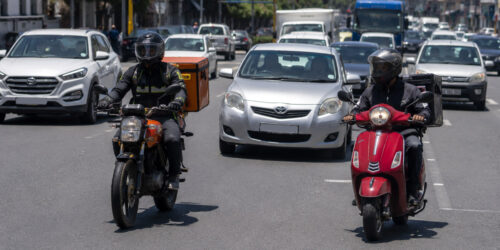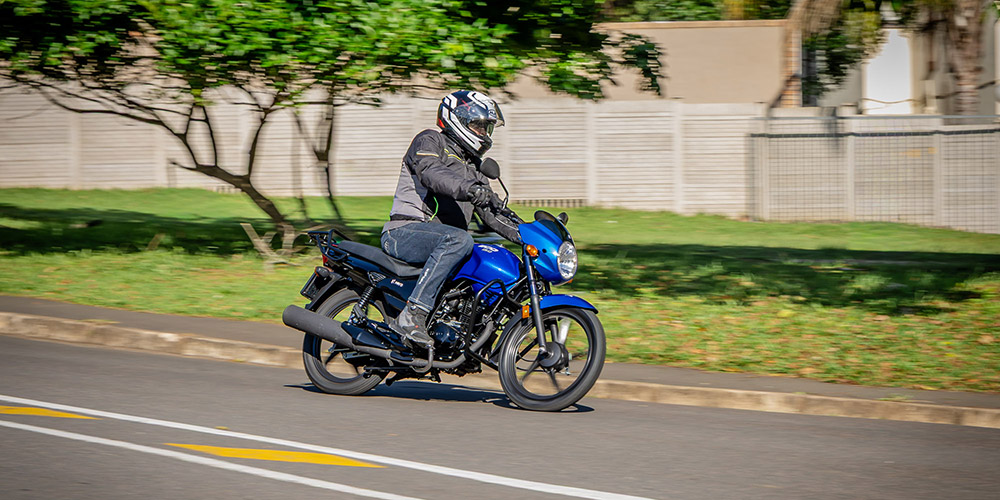
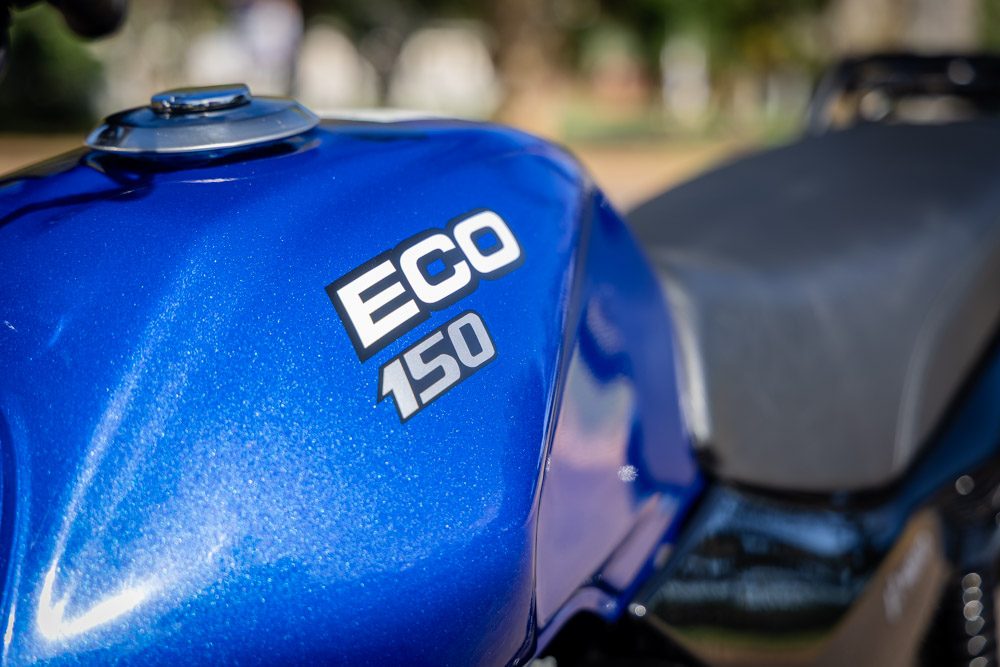
If you’ve spent any time watching delivery riders work their way through traffic in Durban, Joburg or Cape Town, you must’ve seen a Hero ECO 150. It is not a bike anyone buys because it stirs the soul. It is a bike people buy because it works, it is affordable, it is ridiculously cheap on fuel, maintenance costs are a breeze, and it keeps going long after other delivery bikes have given up.
That makes it worth a proper look, whether you are upgrading or replacing, setting up a delivery operation, or just tired of sitting in a taxi or Uber on your way to point B.
What you are buying
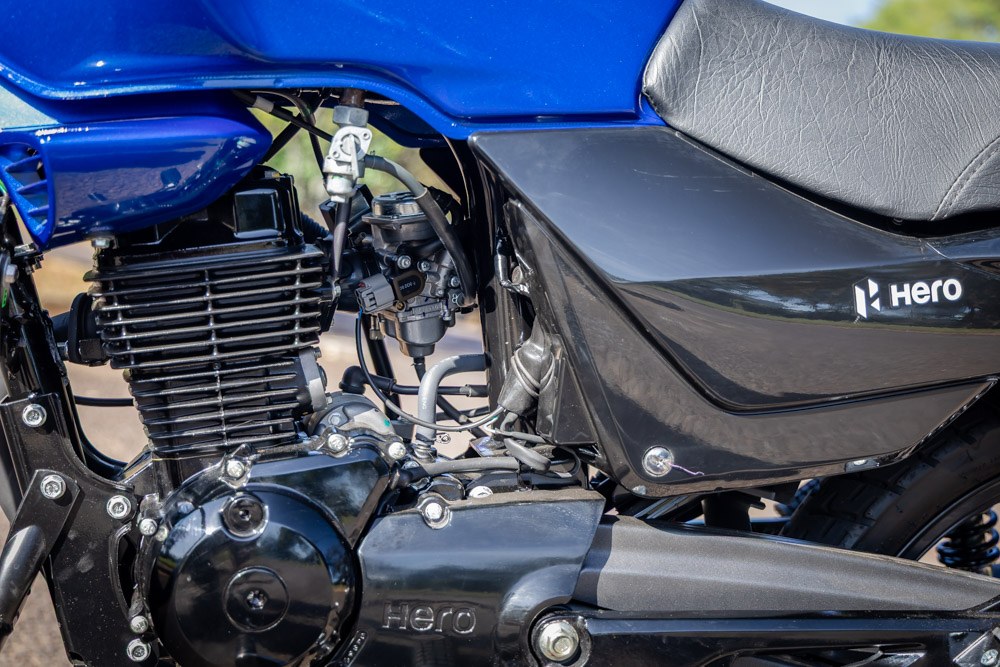
The ECO 150 is a 149.1-cc air-cooled single-cylinder four-stroke with a five-speed gearbox and a chain final drive. It makes 10 kW (13.4 hp) at 8 000 rpm and 12.8 Nm of torque at 5 000 rpm. Fuelling is by carburettor, not fuel injection. Starting is electric.
Kerb weight is 140 kg. The tank holds 12.5 litres with a further 2.3 litre reserve. Ground clearance is 160 mm, and the wheelbase is 1 290 mm.
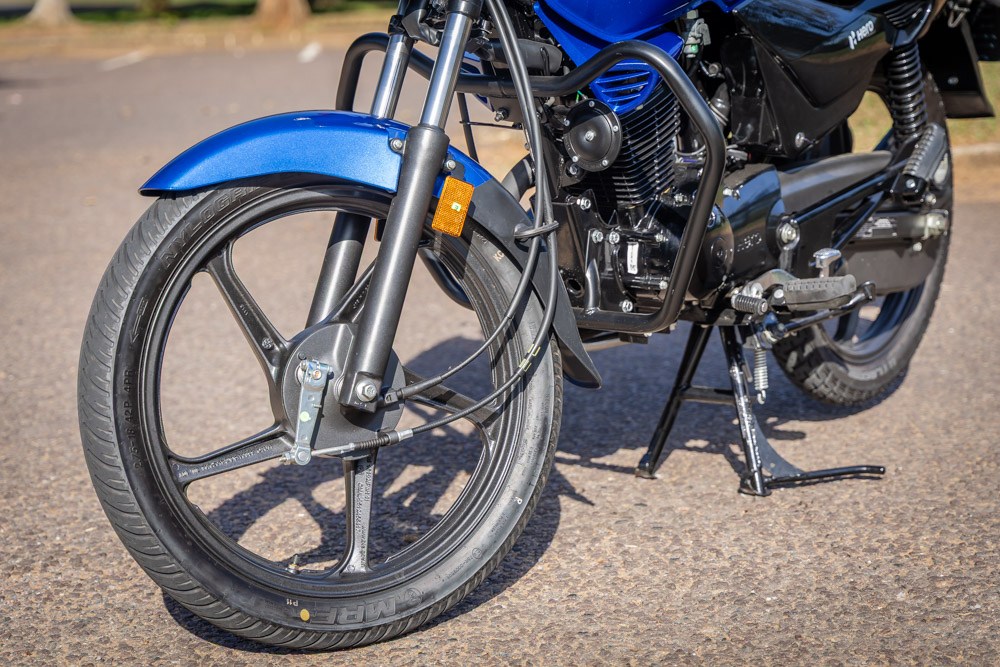
Two things stand out on the spec sheet, and we will come back to both: it runs 130 mm drum brakes front and rear (disc brakes are on the table), and it rolls on 18-inch alloy (ECO 150) or spoked (ECO 150 TR) wheels with tubed tyres.
Pricing sits in the region of R25 000 depending on the dealer and what is included in on-the-road costs. Check current pricing with your nearest Hero dealer, because it moves.
How it rides
The engine is the best thing about this bike. It is genuinely smooth for a single; it pulls cleanly from low revs, and it does not annoy you with vibration through the bars and pegs the way many budget bikes do. You can see off the mirrors at cruising speed, which sounds like a small thing until you’ve ridden something where you cannot.
Power delivery is set up for torque rather than top end. That is the correct choice. A delivery rider pulling away from a stop with 15 kg in a top box does not need 15 000 rpm; they need something that will pull away without slipping the clutch to death. The ECO 150 does that!
It will sit at national road speeds, but it is not happy there for long, and neither will you be. Think of it as a machine that is excellent up to about 80–90 km/h and merely adequate beyond that.
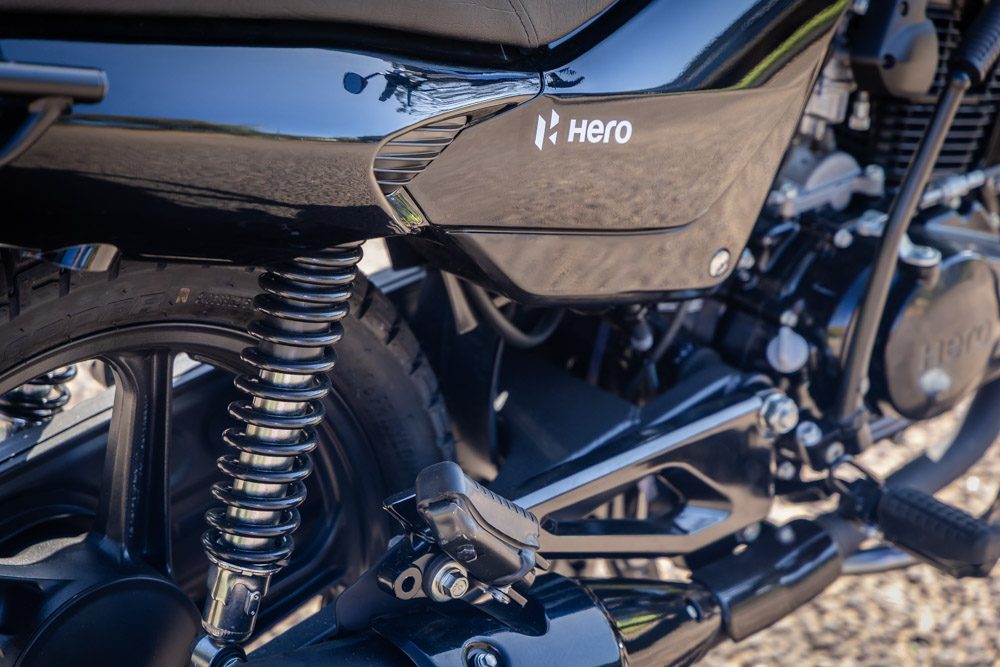
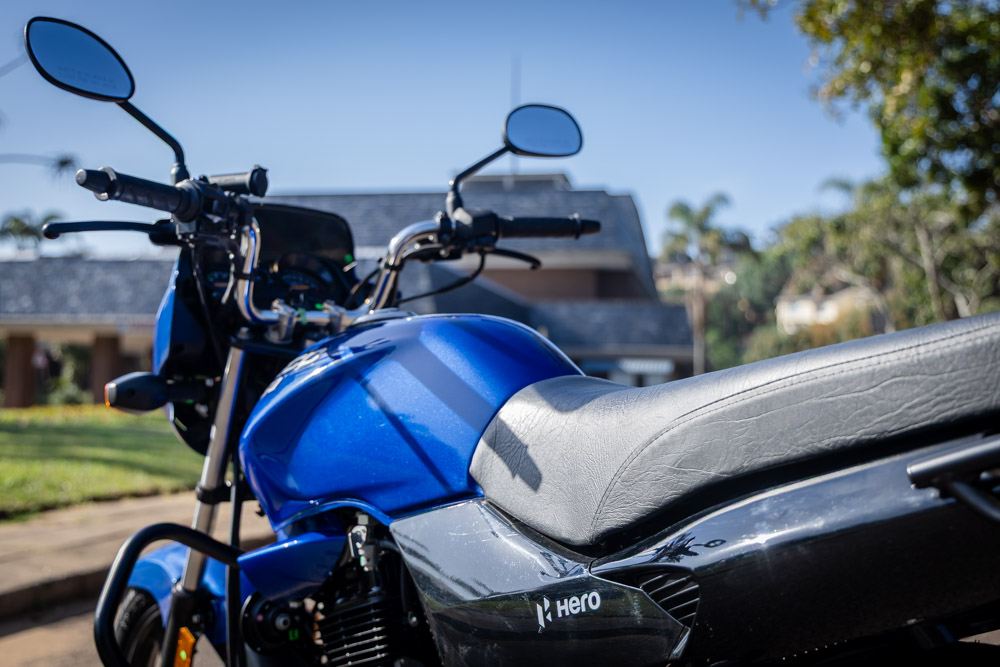
The riding position is upright and roomy, with a long flat seat that genuinely accommodates a pillion or a load. The rear suspension has five-step preload adjustment, which is not a gimmick on a bike that spends its life carrying weight; set it up for how you really ride.
Those 18-inch wheels deserve credit. On South African roads, where a pothole can appear overnight, and half the delivery addresses are down a dirt road, a big-diameter wheel is a real safety advantage over the 10- or 12-inch wheels you find on budget scooters. The ECO 150 simply rides over surfaces that would have a small-wheeled scooter fighting for grip.
Running costs that sell
This is where the Hero ECO 150 earns its keep.
Hero South Africa quotes economy of up to 60 km/l, and a local media test reportedly returned 65 km/l on mixed-use riding. Real-world figures on a loaded delivery bike in stop-start traffic will be lower; plan on somewhere in the 40s to low 50s and treat anything better as a bonus. Even at the conservative end, a 12.5 litre tank gives you well over 500 km of range.
Service intervals are every 3 000 km, and the services are affordable.
The warranty is the headline. Hero South Africa offers a 3-year or 50 000 km engine warranty, subject to servicing at an authorised dealer using Hero Genuine Parts. For a bike at this price point, that is a serious commitment, and it materially changes the ownership maths, particularly for anyone financing a fleet. Read the Warranty Terms and Conditions and stick to the service schedule at an authorised Hero Dealer/Service Centre, because that is the condition attached to it.
Parts availability is good, with Hero Genuine Parts stocked across a national distribution network. That matters more than most buyers realise: a cheap bike with a six-week wait for a part is not a cheap bike.
Worthy mentions:
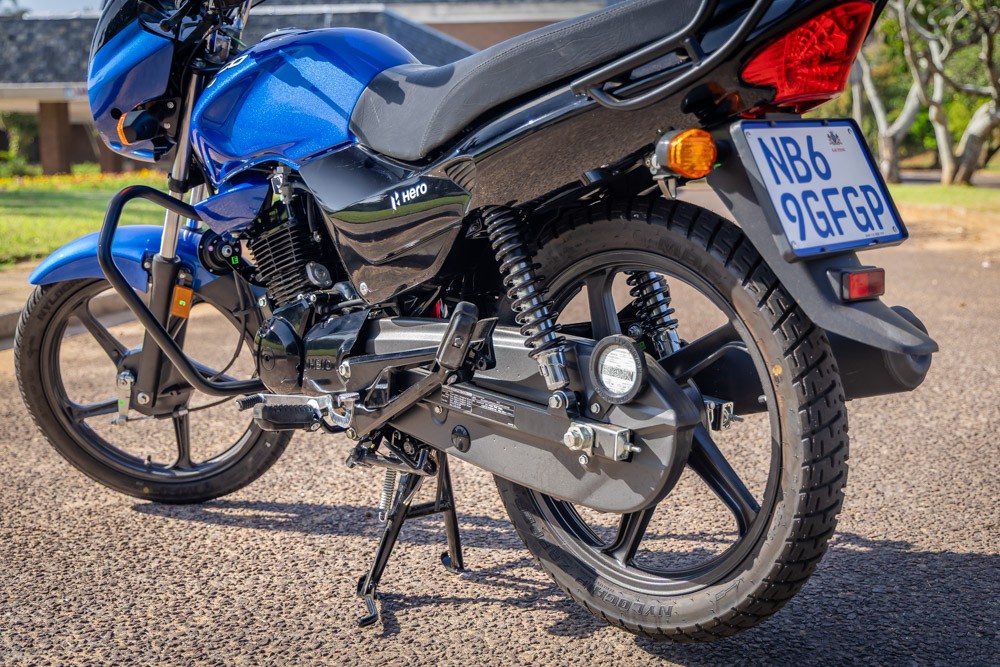
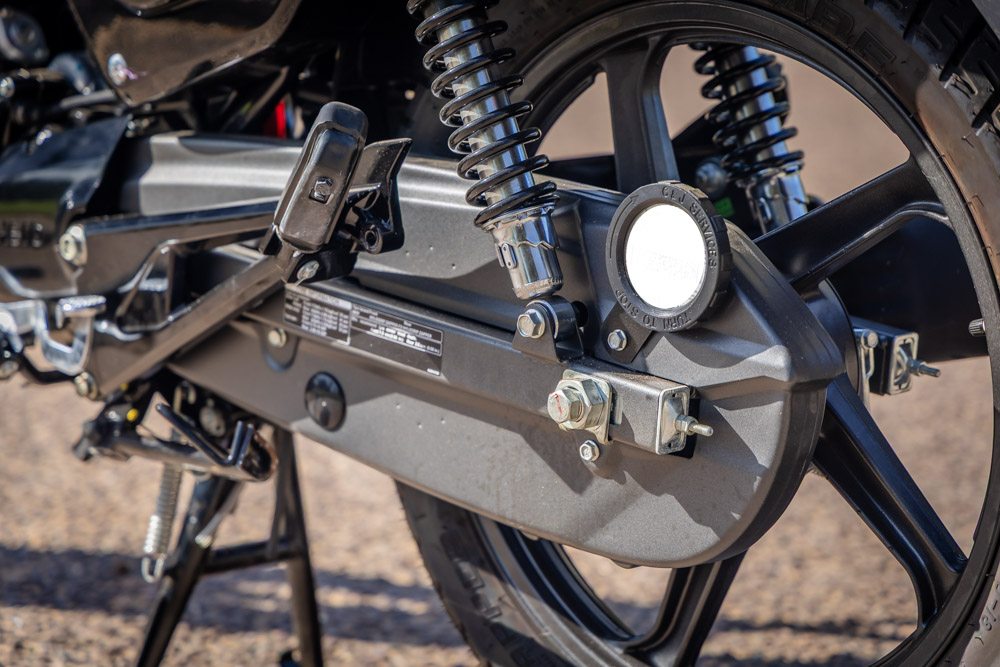
- Enclosed chain: This keeps the chain and sprockets covered and protected from the elements. It stays lubed and clean much longer than an exposed chain and sprockets.
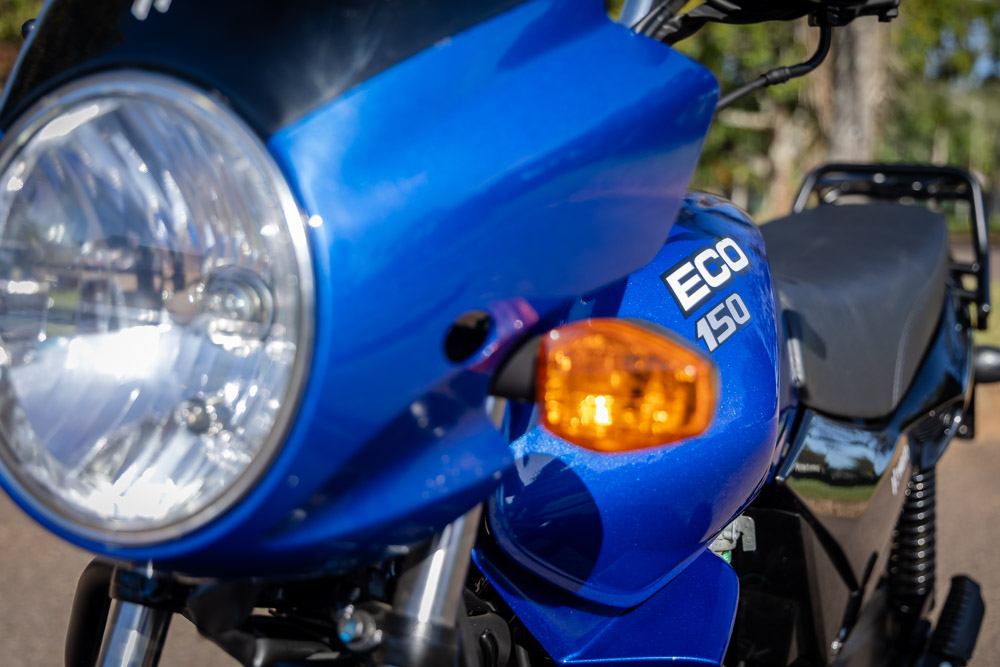
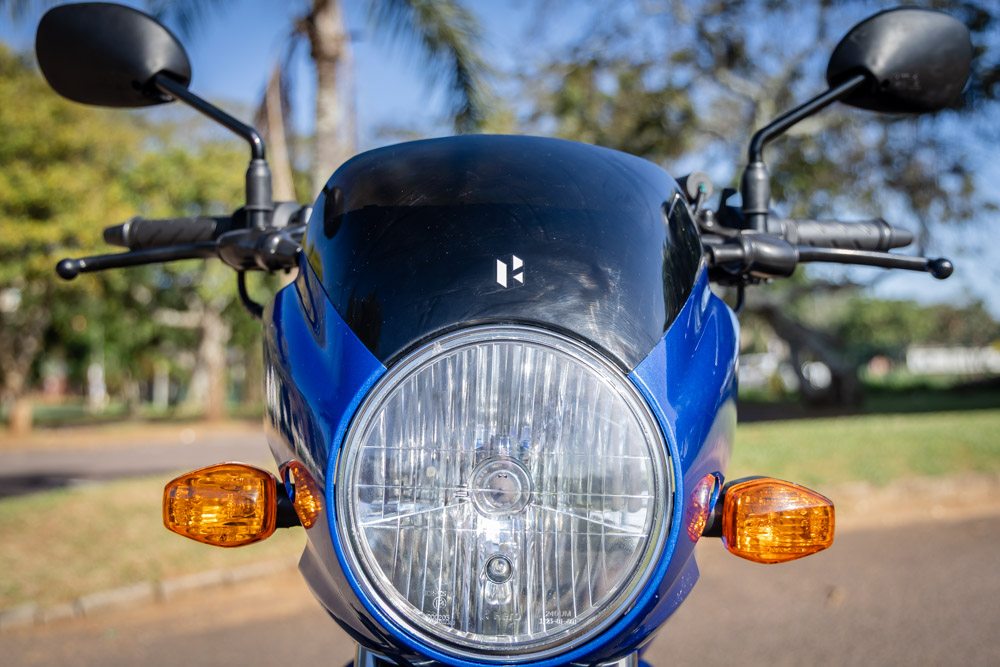
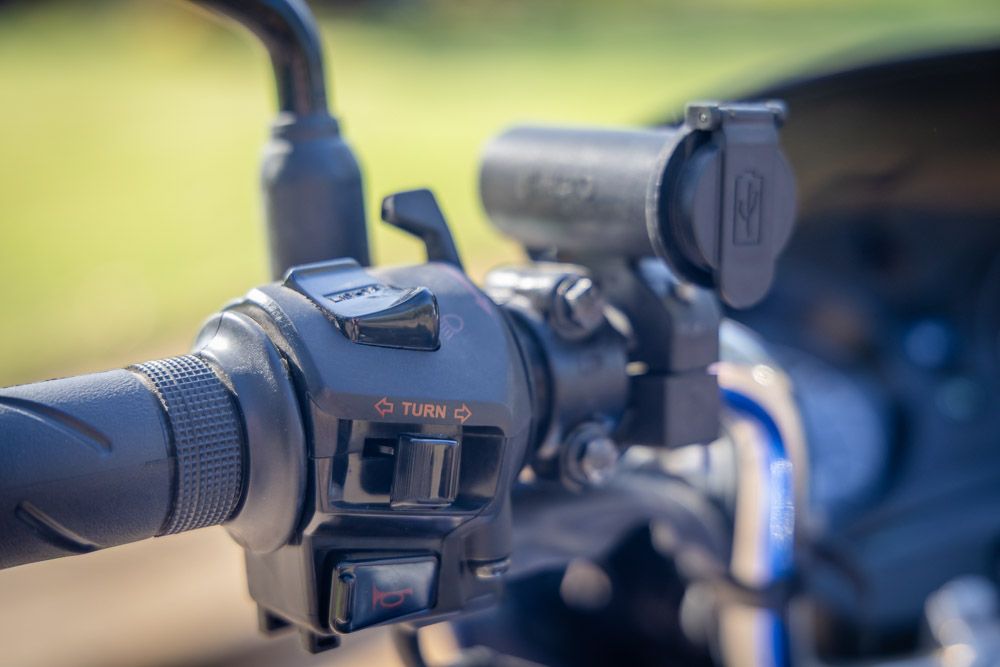
- Amber indicator lenses: Clear indicator lenses with an LED cluster have zero effect in direct sunlight. Hero decided to keep rider safety as a top priority with amber lens covers and incandescent globes fitted front and rear.
The honest bit: the brakes
The ECO 150 has drum brakes at both ends, 130 mm front and rear. There is no disc, no ABS, no combined braking system…yet.
For a learner riding gently, or a commuter on a predictable route, drums are workable. They are progressive, they are cheap to maintain, and they are far less fussy about dust and water than people assume.
But be clear about the limitation. A front drum on a 140 kg bike carrying a rider, a pillion or a loaded top box, in Durban or Joburg traffic, does not give you the stopping power or the feel of a front disc. In an emergency stop, the difference is not academic. Drums also fade with repeated hard use, and they give you less feedback about how close the front wheel is to letting go, which is exactly the information you need most in a panic stop.
If you are buying this bike, take the braking seriously:
- Get the front brake adjusted properly and keep it adjusted. A drum with too much free play at the lever is a drum that is barely working.
- Have the shoes and cable inspected at every service, not just when they feel soft.
- Do proper emergency braking practice, in a safe space, with the load you carry. Find out where the limits are before traffic finds them for you.
- Ride with a following distance that accounts for the brakes you have, not the brakes you wish you had.
If a front disc is available as a factory option in your market, take it. It is the single best money you can spend on this motorcycle.
The other honest bit: tubed tyres
The 18-inch spoked wheels run inner tubes. That means a puncture is not a five-minute plug repair on the roadside; the wheel comes off and the tube comes out.
For a private commuter, this is a mild irritation. For a delivery operation, it is a downtime cost you should build into your planning: carry a spare tube, know who your nearest tyre fitment is, and consider a tube sealant as preventative maintenance.
The upside is that spoked 18-inch wheels are tough, cheap to repair, and survive potholes and kerbs that would crack an alloy rim. It is a trade-off, not a defect.
Who it suits
As a delivery bike — very well: This is what it was built for and what it is sold as. Low running costs, long range, a long rear carrier, a centre stand as standard, a USB charge point for the phone you will be navigating on, and a chassis that will take abuse. Add a properly mounted top box, and keep the box no wider than your mirrors, because a box wider than your mirrors will contact things you cannot see coming.
As a starter bike — yes, with a caveat: It is forgiving, feels light once moving, low on intimidation, and cheap to drop. The caveat is the brakes: a new rider is exactly the person most likely to need maximum stopping power and least likely to have the skill to get it out of a drum. Get proper training. Not a licence day — actual rider training.
As a commuter — yes, if your commute suits it: Urban and peri-urban, under 60 km each way, mostly below 100 km/h: it is hard to argue against on cost. If your commute is a long stretch of highway at 120 km/h, buy something else.
Licence note: the ECO 150 requires a full code A licence in South Africa. A code A1 licence covers you only up to 125 cc, so if you are a 16- or 17-year-old rider planning around A1, this bike is not on the list.
What to watch
- Carburettor, not injection: Simpler and cheaper to fix anywhere in the country, which is a genuine plus. But expect a choke routine on cold mornings and slightly less crisp fuelling than an injected bike.
- Halogen headlamp at 35/35 W: Adequate for lit urban roads, modest on unlit ones. If you ride at night regularly, factor in auxiliary lighting.
- Chain final drive: Clean and lube it. On a delivery bike doing high mileage in wet and dusty conditions, chain and sprocket life is a real running cost.
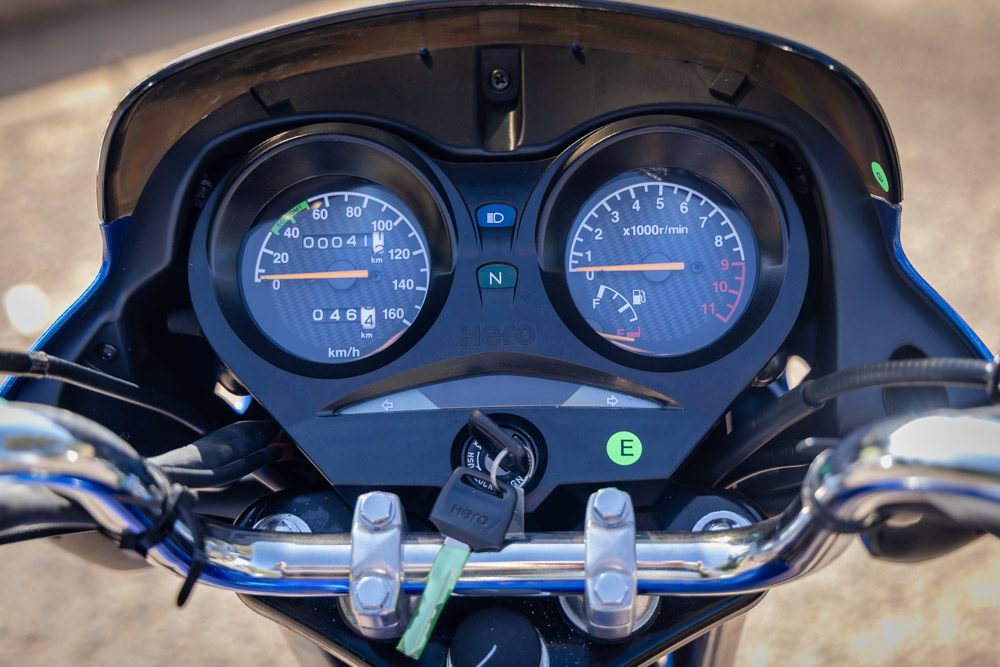
- Basic instrumentation: Speedometer and fuel gauge, and that is largely it. Nothing wrong with that, but do not expect gear indicators or trip computers.
- Drum brakes: Covered above, but worth repeating as the thing you should think hardest about.
I’m impressed
The Hero ECO 150 doesn’t pretend to be anything other than what it is: a tough, affordable, economical working motorcycle with a very strong warranty behind it and a dealer network that can support it.
Judged as a delivery bike, it is one of the most sensible purchases on the South African market. Judged as a starter or commuter bike, it is excellent value provided you go in clear-eyed about the braking, and you invest in the riding skill to compensate for it.
The engine, the economy, the range and the 3-year/50 000 km warranty are the reasons to buy it. The drum brakes are the reason to ride it with more discipline than you would a bike with a front disc. Do that, and it will pay for itself several times over.

Photography by Shutter Xposures
The Motorcycle Safety Institute of South Africa (MSI) tests motorcycles and provides technical insights for importers, fleet owners and operators in South Africa.