
What Every Delivery Rider Should Know
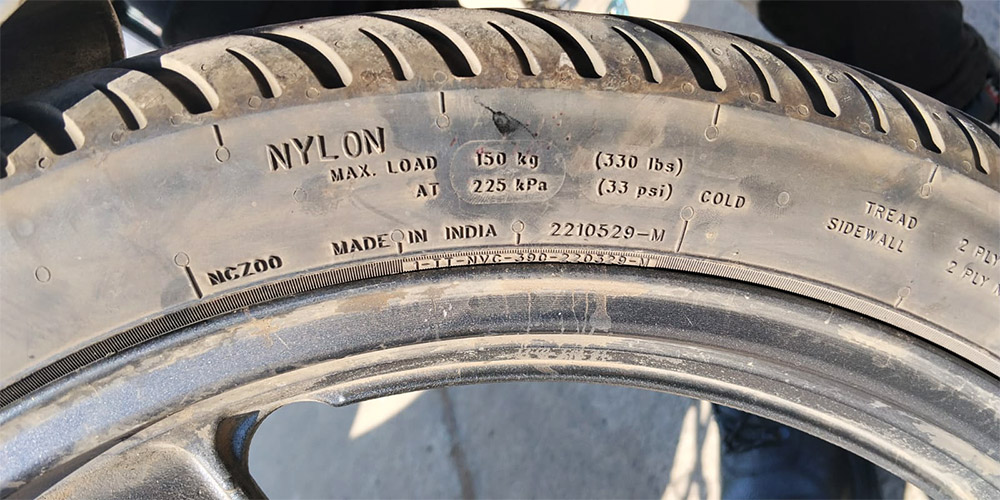
Look down at the tyres on almost every small delivery motorcycle in South Africa — most 125cc to 200cc commuters carrying a loadbox through our suburbs and city centres — and you’ll find the word NYLON moulded into the sidewall. It sits there next to a size like 90/90-18 and a marking such as 4PR or 6PR. Most riders never give it a second glance.
They should! Understanding what a “nylon tyre” is, and what it’s not, is one of the cheapest safety upgrades a delivery rider can make; it costs nothing but attention.
Let me clear up the biggest misunderstanding first.
“Nylon” describes the casing, not the whole tyre
When people talk about “nylon tyres”, they are really describing the casing; the body of the tyre underneath the tread. On these delivery bikes, that casing is built from layers of nylon cord laid diagonally across the tyre, criss-crossing each other in alternating directions. This is called bias-ply, or cross-ply, construction. It is the older, simpler way of building a tyre, and it is what you get on nearly every small commuter and delivery machine because it is affordable and hard-wearing.
The alternative, found on larger and more expensive motorcycles, is a radial tyre. There, the cords run straight across the tyre with a separate belt package on top. Radials generally grip better and handle more precisely, but they cost more and are often simply not made in the small tube-type sizes our delivery bikes use.
So, when we weigh up the pros and cons of “nylon tyres”, we are really weighing up the pros and cons of cheap, tough, bias-ply construction. And there are real advantages, which is exactly why the industry fits them.
Why these tyres suit delivery work
They carry weight well. A stiff bias-ply casing is good at supporting a load, and once you add a rider, a full loadbox and cargo, that matters. A 6PR rating gives you genuine headroom over a 4PR.
They are tough where it counts. On the road surfaces delivery riders ride broken edges, potholes, kerbs, informal areas, a stiff nylon sidewall shrugs off knocks that would damage a softer tyre. That toughness is a real, practical advantage in our conditions.
They are cheap to buy and cheap to fix. The sizes are common and stocked everywhere, and a tube-type nylon tyre can be patched at almost any bike shop for very little. For an owner-operator working on thin margins, low cost and quick repairs keep the bike earning.
They last at low speed. These tyres use hard, long-life rubber compounds built for mileage rather than grip. For steady, low-speed urban work covering long distances, they wear slowly and go the distance.
Where the safety story really sits
Every one of those strengths comes with a trade-off, and the trade-offs are worth knowing.
Wet grip is the weak point. Hard, long-wearing rubber gives up a lot of grip in the wet. That means longer braking distances and far less margin on the slippery surfaces we all know: painted lines, manhole covers, spilt diesel, and that treacherous first rain after a long dry spell. For a rider who works in all weather, this is the real risk, not the tyre’s construction.
The handling feels vaguer. A bias-ply tyre flexes and squirms more under cornering load. With a loaded box behind you, the back of the bike can feel like it “walks” a little, and the steering tells you less about what the front is doing. That is not what you want when you need to swerve suddenly in traffic.
It builds heat. All that flexing makes a bias-ply tyre run hotter than a radial. On a 150cc to 200cc bike that tops out around 90 to 100 km/h, that heat is normally manageable. The danger is when you combine it with an under-inflated tyre and an overloaded box; that is the classic recipe for a blowout.
It can flat-spot overnight. Park a loaded bike cold and the nylon takes a temporary “set”. You feel a thump through the bike for the first few minutes of the day until the tyre warms up and rounds out again. It is usually harmless, but it is more noticeable on a heavily loaded delivery bike.
It hardens and squares off with age and use. These are the two quiet dangers. Cheap compounds harden under our sun, so a tyre can still have plenty of tread yet be dangerously hard and slick simply because it is old. And kilometre after kilometre of straight-line city riding wears the centre of the rear tyre flat; it “squares off” so that the moment you do lean into a corner, you are riding on an edge that has barely been used and offers little grip.
The one thing to remember
If you take nothing else from this, take this: a delivery tyre rarely fails on its own. It fails from a combination of under-inflation, overloading and heat. Get those three right and the tyre will do its job.
The single most powerful thing in your control is tyre pressure, and it is the thing most riders neglect. Set your pressures with a proper gauge when the tyres are cold, and set them for the bike as you ride it: fully loaded, with the box on. The rear especially carries that weight, so it needs the correct pressure for the load, not the empty-bike figure. Check it at least weekly.
Beyond pressure, a short routine keeps you safe:
- Respect the ply rating. Do not load the bike past what the casing is built to carry.
- Replace on age and hardness, not just tread depth. A hard, cracked, sun-baked tyre is worn out even if it looks fine.
- Watch for a squared-off rear and replace it before the only grip left is on the shoulders you never use.
- Ride the wet with respect. Smoother inputs, gentler braking, earlier decisions and more following distance. Give yourself room, especially over painted lines and metal covers, and remember that as a left-side rider you spend a lot of time near the painted edge line and the slippery centre of the lane.
A realistic word on upgrades
Riders often ask whether they should fit radials for better grip. On most 17-inch and 18-inch tube-type delivery wheels, radials either are not offered in the right size or are priced out of reach. The practical upgrade is not a jump to radial at all; it is a better-quality bias-ply commuter tyre: still a nylon casing, but with a better rubber compound that grips more, particularly in the wet. It is a modest spend that pays you back every time the road is slippery.
Nylon bias-ply tyres are not a compromise forced on delivery riders by accident. They are a sensible fit for the job, tough, affordable and hard-wearing. They simply demand that you understand their limits, keep them at the right pressure for the load, and replace them before age or a squared-off profile quietly takes your grip away.
Your tyres are the only thing connecting you to the road. On a delivery bike, treating them well is not an expense. It is the cheapest insurance you will ever buy.
The Motorcycle Safety Institute of South Africa (MSI) trains and certifies motorcycle riding instructors and delivers rider safety programmes across South Africa and the wider continent.


